
Let’s be honest—most storage sheds are… well, kind of boring. You’ve got your flimsy plastic boxes, your wooden structures that rot after a few winters, and your metal garages that look like they belong at a construction site. But here’s the deal: upcycled shipping container storage sheds are changing the game. They’re tough, eco-friendly, and surprisingly stylish. And honestly, they’re a lot more versatile than you might think.
I’ve been digging into this trend—yeah, it’s a real trend now—and I’m kinda blown away. People are turning old steel boxes into backyard workshops, garden tool havens, and even tiny guest houses. But let’s focus on storage sheds for now. You know, the practical stuff. The stuff that actually solves your “where do I put all this junk?” problem.
Why Shipping Containers? (And Why Upcycled?)
First off, shipping containers are built like tanks. I mean, literally—they’re designed to survive ocean storms, stacking, and being dropped by cranes. They’re made from Corten steel, which rusts on the surface but stays strong underneath. That’s a weird flex, but it works.
Now, upcycling? That’s the magic word. Instead of melting down old containers (which takes a ton of energy), you’re giving them a second life. It’s like thrift shopping for your backyard. You get a rugged, weatherproof structure without the environmental guilt. Plus, it’s cheaper than building from scratch—most of the time, anyway.
The “Why Now?” Factor
With lumber prices bouncing around like a ping-pong ball, and everyone looking for sustainable options, shipping container sheds are having a moment. People are ditching the big-box store sheds and going for something that’ll last decades. And let’s face it—a container shed just looks cooler. It’s got that industrial-chic vibe that’s perfect for modern homes or even rustic cabins.
What You Can Store (Spoiler: A Lot)
Here’s the thing—containers come in standard sizes. The most common are 20-foot and 40-foot lengths. A 20-footer gives you about 160 square feet of floor space. That’s enough for a lawnmower, bikes, holiday decorations, and still room to walk around. A 40-footer? That’s basically a small garage.
But don’t just think “boxes.” You can customize the interior. Shelving, pegboards, even a workbench. Some folks add windows and insulation to make it a workshop. Others keep it raw and use it for heavy-duty gear like ATVs or snowblowers. Honestly, the only limit is your imagination—and your local building codes.
Quick Size Comparison Table
| Container Size | Interior Dimensions (approx.) | Square Footage | Ideal For |
|---|---|---|---|
| 10-foot | 9.5’ x 7.5’ | ~71 sq ft | Small tools, garden gear |
| 20-foot | 19.5’ x 7.5’ | ~146 sq ft | Bikes, lawn equipment, seasonal items |
| 40-foot | 39.5’ x 7.5’ | ~296 sq ft | Vehicles, workshop, bulk storage |
See? Not bad. And you can stack them, too—if you’re feeling ambitious. But that’s a whole different story.
The Upcycling Process: From Ocean to Backyard
So how does a rusty old container become your shiny new shed? Well, it’s not magic—but it’s close. First, you find a supplier who deals in used containers. They’ll have “one-trip” containers (barely used) or “wind and watertight” ones (a bit worn but still solid). Prices vary, but expect to pay anywhere from $1,500 to $4,000 for a 20-footer. Delivery’s extra, of course.
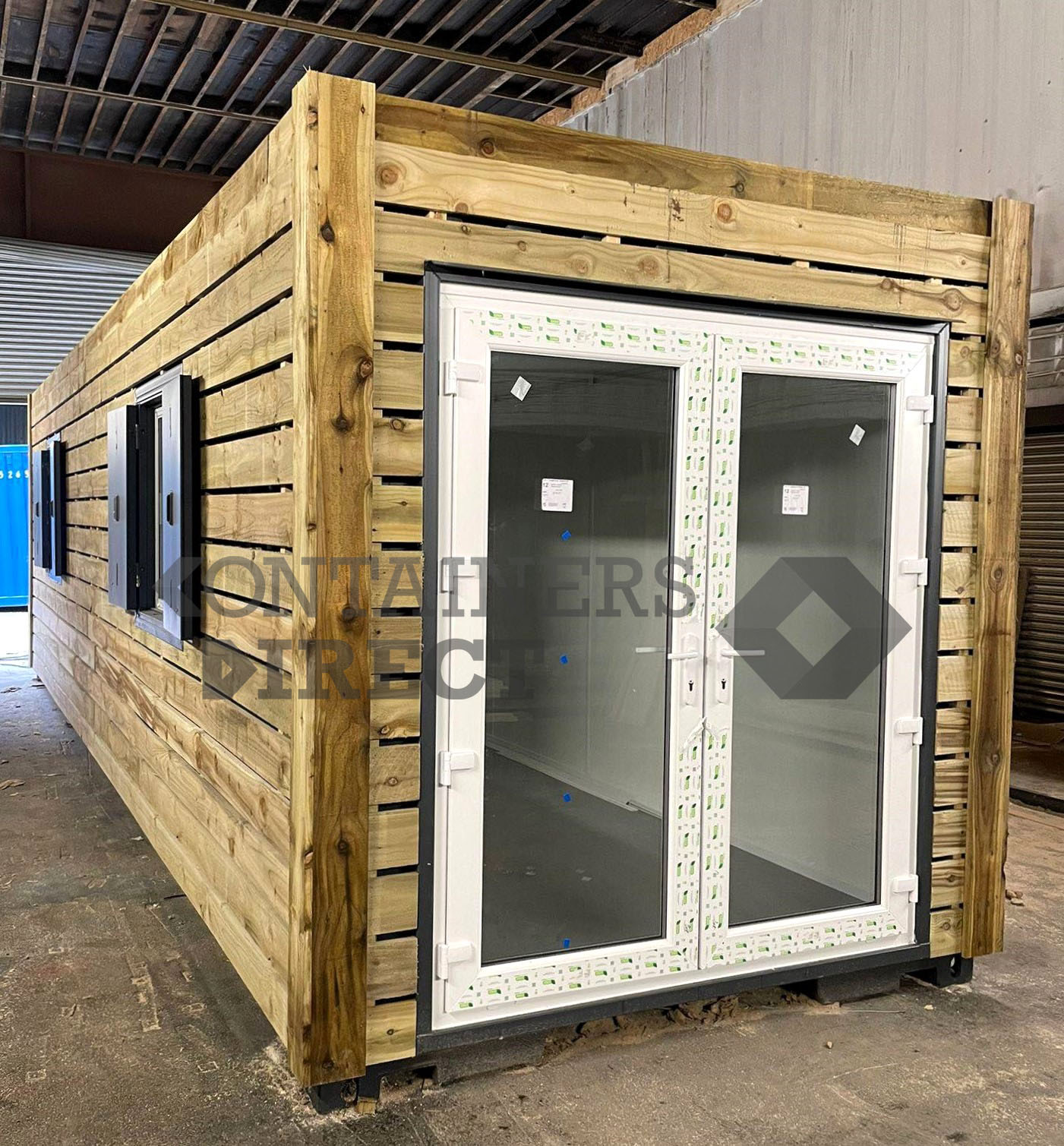
Then comes the fun part: modification. You can cut doors and windows, add vents, paint it, insulate it, or even clad it with wood. Some people go full DIY—just a grinder and a welder. Others hire pros. The key is to seal any cuts to prevent rust. Oh, and don’t forget the floor—most containers have plywood floors that can be replaced or reinforced.
A Few Things to Watch Out For
- Permits – Check local zoning. Some areas treat containers as temporary structures; others want a building permit.
- Foundation – You can’t just plop it on dirt. Concrete blocks, gravel pads, or a simple slab work best.
- Ventilation – Without airflow, condensation builds up. Add roof vents or louvered windows.
- Security – Containers are tough, but the lockboxes can be flimsy. Upgrade to a heavy-duty hasp.
Honestly, the biggest mistake people make is skipping the foundation. Don’t be that person. A level base saves you from headaches later.
Cost vs. Value: Is It Worth It?
Let’s talk money. A new wooden shed of similar size might cost $3,000 to $8,000, depending on materials. A metal shed from a big-box store? Maybe $1,500—but it’ll dent and rust within a few years. A shipping container shed, even after modifications, often lands in the $2,500 to $6,000 range. And it’ll outlast both.
But here’s the kicker: resale value. If you ever move, you can sell the container or take it with you. Try doing that with a pre-fab shed. Plus, the steel is recyclable at end of life. So you’re not just saving money—you’re saving the planet. Sort of.
Cost Breakdown (Rough Estimates)
- Used 20-foot container: $1,800 – $3,500
- Delivery: $200 – $600 (distance matters)
- Foundation (gravel + blocks): $200 – $500
- Modifications (door, window, paint): $500 – $2,000
- Insulation & shelving: $300 – $1,000
Total? Around $3,000 to $7,600. That’s competitive with a mid-range wooden shed—but way more durable.
Design Ideas That Don’t Suck
Okay, so you’ve got a steel box. Now what? Don’t just leave it looking like a shipping crate. Here’s where the fun begins.
Paint it a bold color—like barn red or forest green—and it blends into the landscape. Add a wooden pergola on top, and suddenly it’s a charming garden feature. Cut a large window on one side for natural light, and you’ve got a potting shed. Or keep it industrial with corrugated metal and black trim. It’s like a tiny, rugged fortress.
One guy I read about turned his into a “she shed” with floral curtains and a porch swing. Another used it for motorcycle storage with a ramp door. The point is: don’t be afraid to get creative. These things are blank canvases.
Popular Modifications at a Glance
- Roll-up door (like a garage) for vehicle access
- French doors for a workshop entry
- Skylights or solar tubes for lighting
- Lofted shelving for vertical storage
- Exterior wood cladding for a warmer look
Just remember: every cut weakens the structure a bit. So plan carefully. And hire a professional if you’re not comfortable with a grinder.
The Environmental Angle (Because We Care)
Look, I’m not gonna preach. But upcycling a shipping container is genuinely greener than buying new. There are millions of unused containers sitting in ports worldwide. By repurposing one, you’re reducing demand for new steel and lumber. Plus, you’re keeping a hunk of metal out of a scrapyard.
That said, shipping containers aren’t perfect. They’re energy-intensive to modify, and the paint might contain chemicals. But compared to building a wooden shed from scratch? It’s a net win. Especially if you use eco-friendly insulation (like sheep’s wool) and low-VOC paint.
Final Thoughts (No Fluff)
Upcycled shipping container storage sheds aren’t just a trend—they’re a practical, durable, and surprisingly affordable solution for anyone tired of flimsy sheds. They’ve got character, they’ve got strength, and they’ve got that “I built this myself” vibe—even if you hire someone.
Sure, there’s a learning curve. You’ll need to deal with permits, foundations, and maybe a little rust. But the payoff is a storage space that’ll outlast your house. And honestly? That’s pretty cool.
So if you’re sitting on a cluttered garage or a yard full of junk, maybe it’s time to think inside the box. A really big, steel, upcycled box.