
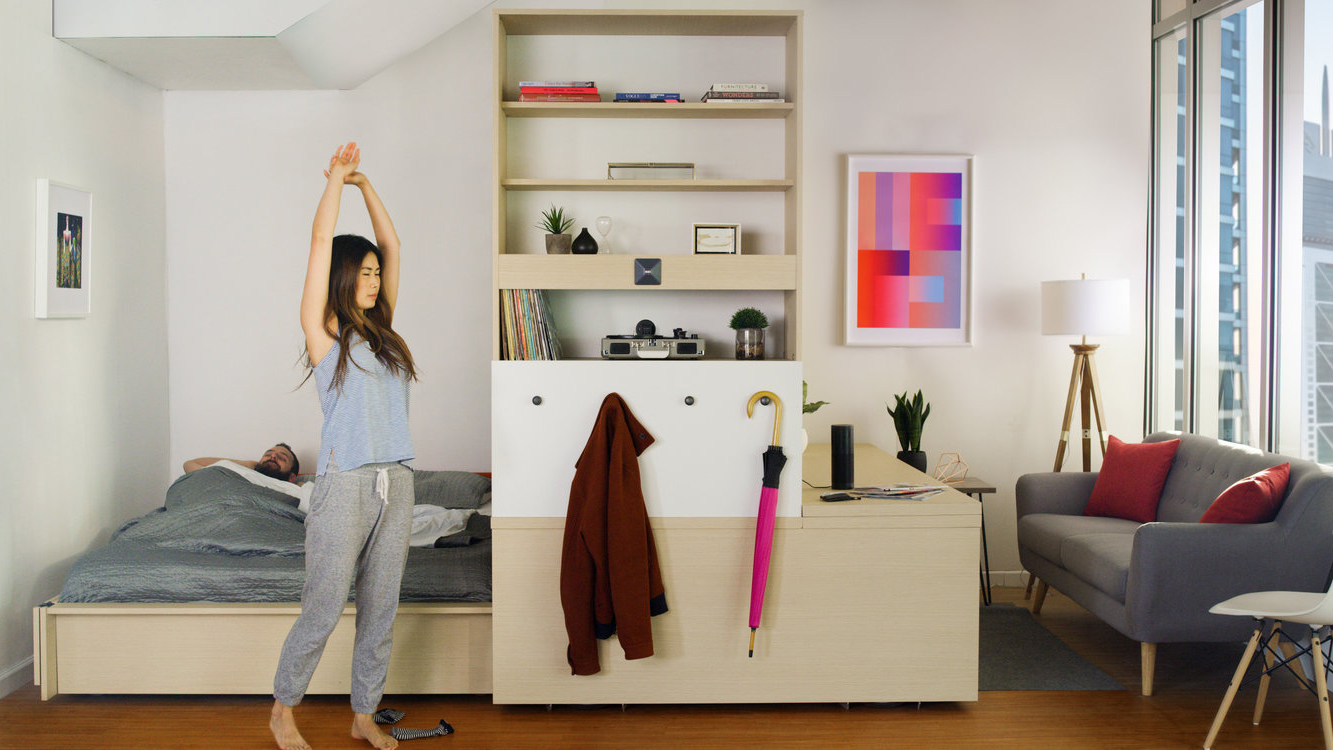
Let’s be honest. City living is a trade-off. You get the energy, the culture, the pulse of everything happening right outside your door. But what you often sacrifice is space. Micro-apartments, studio flats, compact condos—whatever you call them, they’re a reality for millions. And furnishing one? Well, that’s a unique puzzle. You can’t just plop a standard three-seater sofa in a 400-square-foot home and call it a day.
That’s where the magic of adaptable and modular furniture comes in. Think of it less as furniture and more as a toolkit for your life. It’s the architectural Swiss Army knife for your home, allowing a single room to morph from home office by day to dining room at six to cozy lounge by night. This isn’t just about saving space. It’s about creating a home that actually works for you, not against you.
Why Static Furniture Fails in Fluid Spaces
Here’s the deal: traditional furniture is designed for static rooms with single purposes. A bedroom. A dining room. But in a micro-apartment, every square foot has to pull double, even triple duty. A static bed gobbles up precious floor space 14 hours a day while you’re not using it. A bulky bookcase can’t become anything else. It just… sits there.
Adaptable furniture, on the other hand, embraces change. It’s built for the fluidity of modern urban life—where you might work from home, host a dinner party, need a guest bed, and practice yoga all in the same 24-hour period. The core principle is transformation. A table becomes a desk. A sofa unfolds into a bed. Shelving climbs the walls or rolls on casters to wherever it’s needed. It’s furniture that listens.
The Core Principles of Modular Design
Okay, so what makes furniture truly modular or adaptable? It’s not just a loft bed with a desk underneath (though that’s a classic start). True modular systems are built on a few key ideas.
1. Multi-Functionality is King (and Queen)
Every piece should earn its keep. We’re talking about ottomans with hidden storage, coffee tables that rise to dining height, and room dividers that also house your entire media center and book collection. The goal is to reduce the total number of objects in the room by making each one work harder.
2. The Power of Reconfiguration
Modular sofas are the poster child here. You can start with a simple chaise, add a corner unit next month, and maybe a ottoman module later. They rearrange to fit your space and your social needs—perfect for that occasional movie night with friends. The same logic applies to shelving units and even modular kitchen islands.
3. Vertical Thinking
When floor space is limited, you must look up. Tall, slender shelving. Wall-mounted drop-leaf tables. Beds with serious under-bed storage systems (not just the dusty void where lost socks go). Utilizing vertical space is the single biggest hack for making a micro-apartment feel spacious and organized.
Smart Picks for Key Zones in Your Micro-Home
Let’s get practical. How do you apply this? Here are some ideas for the main zones in your compact living space.
The Living/Sleeping/Everything Zone
This is the big one. Your main room needs to be a chameleon.
- Sofa Beds & Daybeds: The classics, but now smarter than ever. Look for mechanisms that are easy to use and mattresses actually comfortable for sleeping. A daybed with a trundle can be a sofa and guest bed simultaneously.
- Murphy/Wall Beds: The ultimate space-saver. Modern versions are sleek, often integrating with desks, shelving, or sofas. You literally get your entire floor space back when the bed is up.
- Nesting Tables & Modular Seating: A set of nesting tables tucks away in a corner. Individual modular seating cubes can be arranged as a sofa, separated as extra seating, or used as footstools.
The Kitchen & Dining Nook
Even if you only have a two-burner cooktop, your dining setup can be elegant.
- Expandable Tables: A console table against the wall that unfolds to seat four or six. Or a simple drop-leaf wall table that vanishes when not in use.
- Mobile Kitchen Islands: A unit on lockable casters that provides prep space, storage, and can be wheeled aside to open up the room. Some even have flip-up breakfast bars.
The Home Office (That Disappears)
With remote work sticking around, a dedicated work zone is crucial—but it shouldn’t dominate your living area.
A wall-mounted, fold-down desk is a game-changer. It folds flat when your workday ends, leaving no trace. Pair it with a slim, rolling file cart that can tuck into a closet. The psychological benefit of being able to “put work away” is massive in a small space.
Choosing Pieces That Last: Quality Over Quantity
Now, a word of caution. Because this furniture moves, transforms, and bears more load, flimsy construction just won’t cut it. You know? Look for solid joinery, robust hardware, and durable finishes. It’s better to invest in one excellent, versatile piece than three cheap ones that will wobble and wear out in a year.
Check the weight capacity of that sofa bed. Test the smoothness of the drawer slides on a storage ottoman. Listen for creaks in the folding mechanism of a table. This furniture is an investment in your daily peace of mind.
The Bigger Picture: A Mindset, Not Just a Purchase
Ultimately, furnishing a micro-apartment with adaptable furniture is about adopting a new mindset. It’s a shift away from filling space and towards curating functionality. It asks you to be more intentional about what you bring into your home. Each piece is a strategic choice for flexibility.
And honestly, there’s a freedom in it. Your home isn’t a fixed set of rooms dictated by bulky possessions. It’s a canvas you can redraw every single day to match your mood, your needs, your life. That’s a pretty powerful way to live, no matter your square footage.
So the next time you look at your compact space, don’t see limitations. See potential. See a puzzle waiting for the right, smart, wonderfully adaptable pieces to make it whole—and uniquely yours.